Can Bangladesh hold a free and fair election?
“When our actions do not, our fears do make us traitors” said Lady Macduff in Act 4, Scene 2, lines 2-3 of Macbeth by William Shakespeare. The simplified meaning of this is, even if we do not do anything wrong, our behaviour or attitude may appear that we have committed the crime.
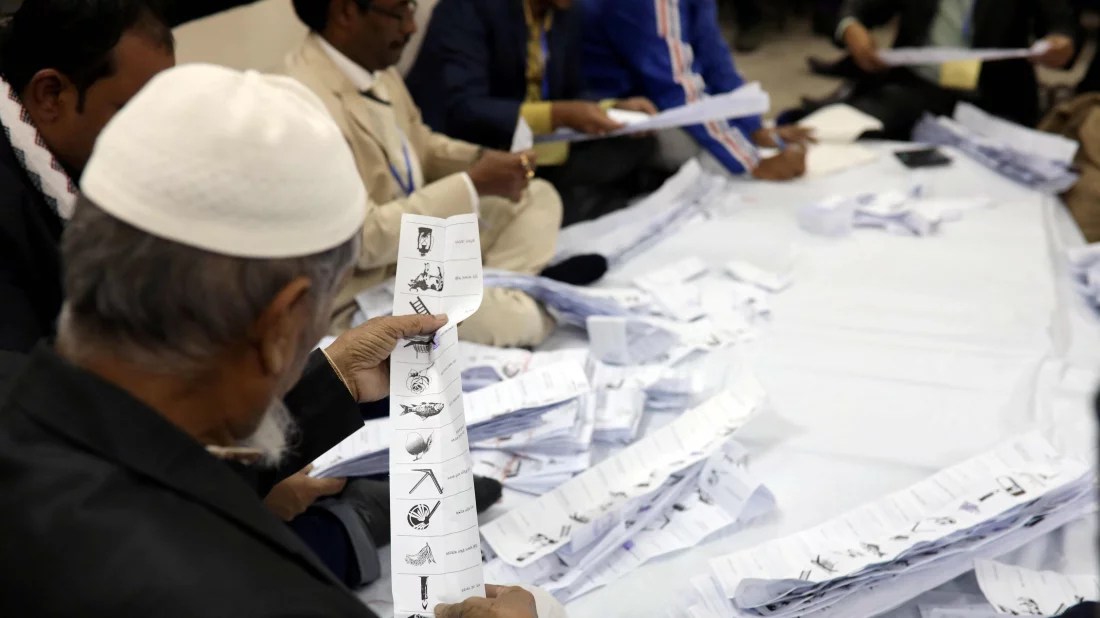
Seemingly, Bangladesh is going through both right now. While actions towards creating a conducive environment for holding a free and fair national election are increasingly becoming a lesser priority, fear is about the possible consequences of losing the election. The ruling party has reiterated its stance on holding the December 2023 election in line with the constitutional provision. But major opposition parties are demanding a caretaker government to lead the process.
Why is there a difference?
There is widespread debate that the Supreme Court’s December 2011 verdict on the 13th Amendment abolishing the caretaker government was tampered with by scissoring the part entailing that the voided system may be practised for another two parliamentary terms for the sake of “safety of the state and its people.”
Despite claims made by the Election Commission (EC) and the party in power that the elections were free and fair, the sad truth is, Bangladesh as a country has never been able to do so. With the fall of the military ruler HM Ershad, the first national election held under the stewardship of the Caretaker Government was also flawed. But the best part of it was the participation of people and political parties, the key element of elections in a democracy.
Sadly, since 2014, elections in Bangladesh have largely been flawed — elections were either held without the participation of the major political parties or dummy political parties and candidates helped to win candidates of choice. Voters were quite reluctant to cast their vote as they held a preemptive idea about who was likely to win.
Voting has traditionally been a festive activity, there were winners and losers. At present, it is still a festive activity but without any colour, and there is no loser here. People hardly care to be part of this festivity. The Dhaka-17 by-election held in July 2023, witnessed only 11.5% voter turnout — the lowest in any by-election held in the last four years. The anticipated winner ultimately won the election bagging only 28,816 votes. This is unimaginable in a constituency of more than 3,00,000 voters.
With only three months left, can Bangladesh bring back the glory and hold a free and fair election?
Going back to Lady Macduff’s “action,” an intriguing development took place. Very recently, a top-ranking former bureaucrat enjoying his post-retirement leave (PRL) took charge of the ruling party’s National Election Administration Committee as its chief coordinator. He was appointed to the highest-ranking portfolio of the bureaucracy in December last year only to be sent to RPL after 19 days.
Appointing a former bureaucrat to a party position is neither wrong nor illegal. The Public Service Act of 2018 does not impose any kind of restriction on public officials in joining a political party and holding a party position after they retire from service. Public officials, historically the members of the defense service and admin cadre, have held party positions. Other public officials have not been able to make an impact in terms of getting party positions.
What could be the likely impact?
Article 119 of the constitution of Bangladesh has mandated the EC to hold the parliamentary election. As the EC does not have enough manpower of its own to conduct such elections, Article 126 has empowered the EC with the provision that It shall be the duty of all executive authorities to assist the Election Commission in the discharge of its functions.
Therefore, a large section of public officials get involved in parliamentary elections. At the district level it is not the District Election Officer, an appointee of the EC, but the Deputy Commissioner holds the position of the Returning Officer. Therefore, the role of the bureaucracy, particularly the administration cadre is critically important in holding a free and fair election.
Against this backdrop, it is very likely to create an uneasy situation for public officials involved in the election process if they receive a request from their ex-boss. Can the EC hold elections in a free and fair manner without active support from the bureaucracy?
The last few months have been the birth months of political parties. While little-known political parties with no field existence got registration from the EC, some incumbent parties despite meeting the required criteria did not get registration. Needless to mention two of the political parties that did not get registration were critical to the current government.
According to a news report, a major reshuffle in the field administration and police force is on the cards that may see significant changes in the posting of DCs and Superintendent of Police (SP). A move, that many view as an attempt to influence the upcoming national election. Even though the EC is mandated with the direct authority to control the field administration and police during elections, events surrounding Gaibandha-5 by-election proved the opposite. EC’s shift from “out of control” to “fair, disciplined, and peaceful manner” proved that peoples’ participation no longer matters.
Now turning to “fear” — it has grappled nations’ attention. The primary concern revolves around the potential effect of a change in power. While the general people largely seem to be unerupted by any change in power, the ruling elite, the direct beneficiary of a hybrid regime, seems to care a lot.
Who are these elites?
The recent conflict between the two branches of civil service and the students’ faction of the ruling party is perhaps a testament that political affiliation is deeply rooted in the governance structure of the country. It is undermining the high ideals of nationalism, socialism, democracy, and secularism as stated in the constitution of Bangladesh.
The preamble also states that the fundamental aim of the State is to realize through the democratic process a socialist society, free from exploitation a society in which the rule of law, fundamental human rights and freedom, equality, and justice, political, economic, and social, will be secured for all citizens.
There are stark differences between these high ideals and the present reality after more than 50 years of independence. The democratic process will only exist if the upcoming national election is free and fair.
This was first published in the Dhaka Tribune on 15 October 2023. Please click here to read on the site.

 Muktochinta